Freedom Starts with Admitting Addiction
When you look in the mirror do you see a REAL drug addict looking back?
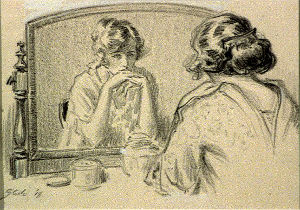
It isn’t easy looking in the mirror and finally seeing the truth: nicotine didn’t just “become a habit.” It took control. And the moment you stop arguing with that reality is the moment you stop helping addiction run your life.
At first, admitting addiction can feel like surrender. It can feel like defeat. But that reaction comes from a lifetime of being taught the wrong story — that dependence is weakness, that quitting is only “willpower,” and that needing nicotine says something shameful about you.
It doesn’t.
Admitting addiction isn’t humiliation. It’s clarity. It’s the end of excuses, bargains, and magical thinking. It’s the beginning of freedom because it finally makes the rules visible.
For years I told myself I was “hooked.” But until the day I fully accepted what that meant — that nicotine had created real drug dependence — I kept leaving myself loopholes. I kept hunting for a way to keep using and still be free.
There is no such deal.
Like alcoholism, nicotine addiction is real and permanent. That doesn’t mean you are broken. It means the rules don’t change. It means that once dependence exists, the brain remembers. And it means recovery becomes simpler when we stop pretending otherwise.
In 1974, psychiatrist and addiction researcher Dr. M.A.H. Russell explained it with brutal precision:
“There is little doubt that if it were not for nicotine in tobacco smoke, people would be little more inclined to smoke than they are to blow bubbles or to light sparklers.”
“Cigarette-smoking is probably the most addictive and dependence-producing form of object-specific self-administered gratification known to man.”[1]
Over the years, millions of nicotine addicts tried proving Dr. Russell wrong. In January 2003, a Miami based company, the Vector Group Ltd., began marketing a nicotine-free cigarette called Quest in seven northeastern U.S. states.
A novelty item, thousands rushed out to buy their first pack of nicotine-free smokes. But locating any smoker who returned to purchase a second pack proved nearly impossible.
Because nicotine is the product. Everything else is packaging.
We would no more smoke nicotine-free cigarettes than we’d smoke dried leaves from the backyard. The behavior was never the point. The drug was.
Hello! My name is John and I’m a recovered nicotine addict.
It is not normal for humans to light things they place between their lips on fire and then intentionally suck the fire’s smoke deep into their lungs. Nor is it normal to chew or suck a highly toxic non-edible plant, hour after hour, day after day, year after year.
But addiction makes abnormal behavior feel “reasonable” because nicotine temporarily relieves the wanting that nicotine itself creates. Each use doesn’t solve the problem — it reinforces it, laying down another high-definition memory that whispers: “This is how you feel normal.”
And that is why minimizing addiction as a “nasty little habit” serves the nicotine industry so well. Habits can be adjusted, controlled, played with, and moderated. Addiction cannot. Addiction is all-or-nothing.
Even today, mind games still sell loopholes. “Just switch products.” “Just lower the dose.” “Just go nicotine-free.” The promise is always the same: keep the ritual, keep the relief, keep the identity — and still be free.
Smokers heard the same promises long before e-cigs. Gradual weaning schemes were always available. But as most nicotine users discovered, “weaning” rarely ends in freedom. It usually ends in continued use, continued dependence, or replacing one delivery system with another.
In recent years I’ve come across a few e-cig users who successfully weaned down to nicotine-free juice, only to discover that they couldn’t stop vaping. The only explanations so far have come from animal studies.
A 2015 mouse study taught us that higher fructose levels can reinforce the effects of sugar and “possibly lead to neurobiological and physiological alterations associated with addictive and metabolic disorders.”[2]
Then came a 2020 study of mice that vaped nicotine-free apple flavored e-juice. It found that the mice developed reward-related behaviors without nicotine.[3]
Imagine switching to e-cigs believing you could eventually wean off nicotine, and after succeeding, discovering you were still chained to the device. Different cage. Same captivity.
The moral of the story? If seeking to avoid a second addiction, flavors belong in the stomach, not vaporized and inhaled into the brain.
Back to the power of admitting who we are.
The neo-nicotine industry knows that as long as “adult free-choice” marketing keeps addicts believing they’re in full control, many will keep paying — not for pleasure, but for relief from the wanting that dependence creates.
So let’s cut through the fog. Can you say it yet — and mean it?

Regardless of the delivery device or method used to introduce nicotine into the bloodstream, fully accepting that our addiction is as real and permanent as alcoholism simplifies recovery’s rules. In fact, unless also addicted to inhaling an e-juice flavoring, there’s only one.
It’s called the “Law of Addiction.”
References
- 1. Russell, MA, The Smoking Habit and Its Classification, The Practitioner, June 1974 Volume 212 (1272), Pages 791-800.
- 2. Levy AM et al, Fructose:glucose ratios— a study of sugar self-administration and associated neural and physiological responses in the rat, Nutrients, May 2015, Volume 7(5), Pages 3869-3890. doi: 10.3390/nu7053869.
- 3. Cooper SY et al, Green apple e-cigarette flavorant farnesene triggers reward-related behavior by promoting high-sensitivity nAChRs in the ventral tegmental area, eNeuro August 3, 2020, eNeuro.0172-20.2020; DOI: 10.1523/eNeuro.0172-20.2020